Blog: AI-assisted software, still under control
Research and practice on how to build software with artificial intelligence without losing control of what ships.
Ten concrete proposals for systems engineering education in Mexico now that AI writes code
What should change today in how Mexico trains systems engineers: accreditation, internships as audits, faculty training, shared compute and a new entry door for people starting out.
What to study (and what not to) in a systems engineering degree for 2032: a 9-semester proposal
We review a real TecNM curriculum and our own reform proposal, separate what lasts from what expires, and propose a 9-semester systems engineering degree designed for the AI era.
Inside our spec-driven development framework: how we built it, and how to build yours
Five pillars, two cross-cutting axes, 20 non-negotiable rules each enforced by a mechanism, and a process that scales with risk. The anatomy of AI-ASEE, the SDD framework behind all our AI-built software, and a playbook to adapt one to your company.
The broken pipeline: how do you train auditors when nobody starts by programming anymore?
If AI now does the work people used to learn on, where will the judgment to audit it come from? What the evidence says about learning with AI, and a training ladder for newcomers.
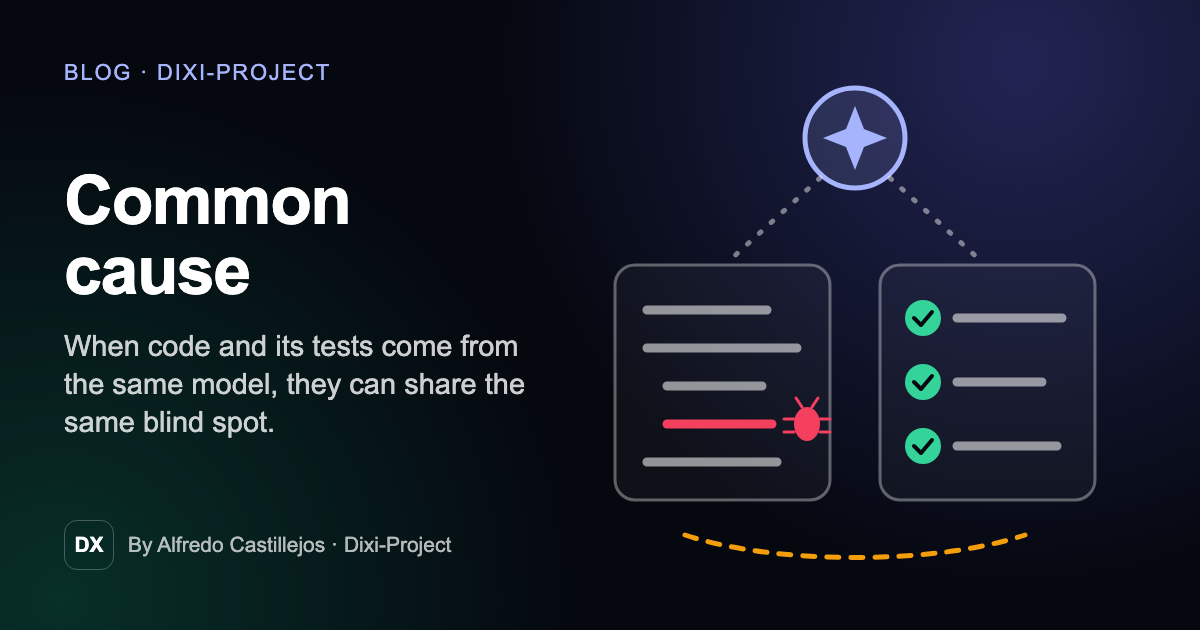
Do AI-written tests catch AI-written bugs? A common-cause experiment with mutation testing
Twelve modules, four AI-generated test suites and 383 mutants. We preregistered the common-cause hypothesis; the result did not support it, but it exposed one blind spot of the same model.
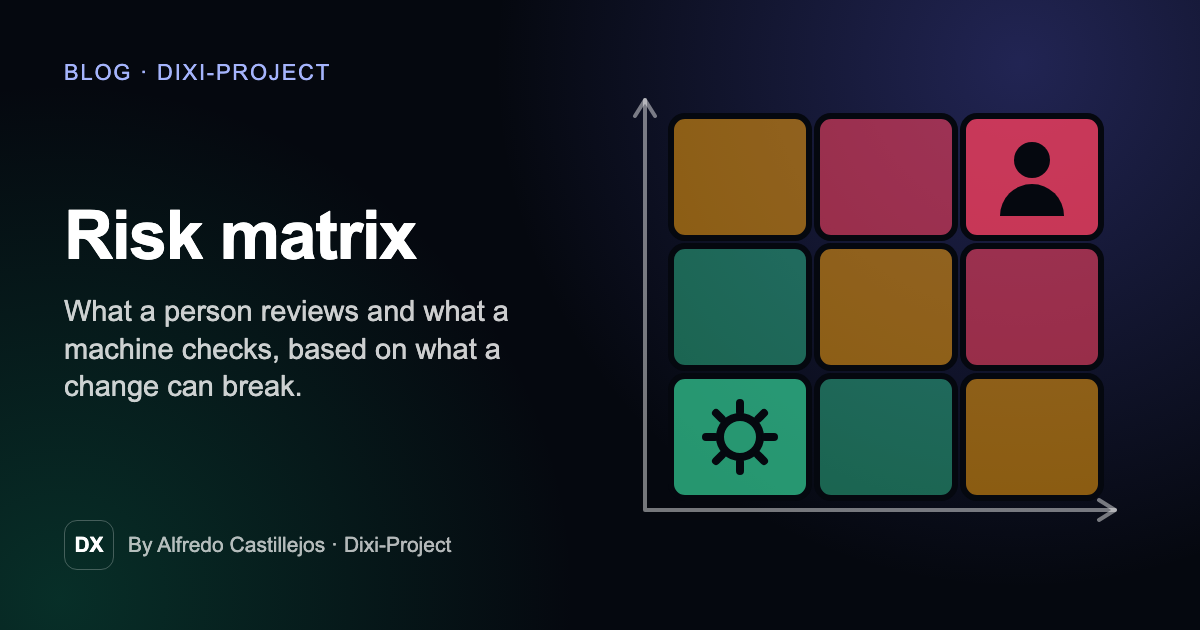
Classifying the risk of a change: a practical matrix for deciding what a person reviews and what a machine does
Reviewing everything with the same intensity means reviewing what matters badly. A four-level matrix, borderline cases, controls per level, and what happened when we applied it to our own 141 PRs.
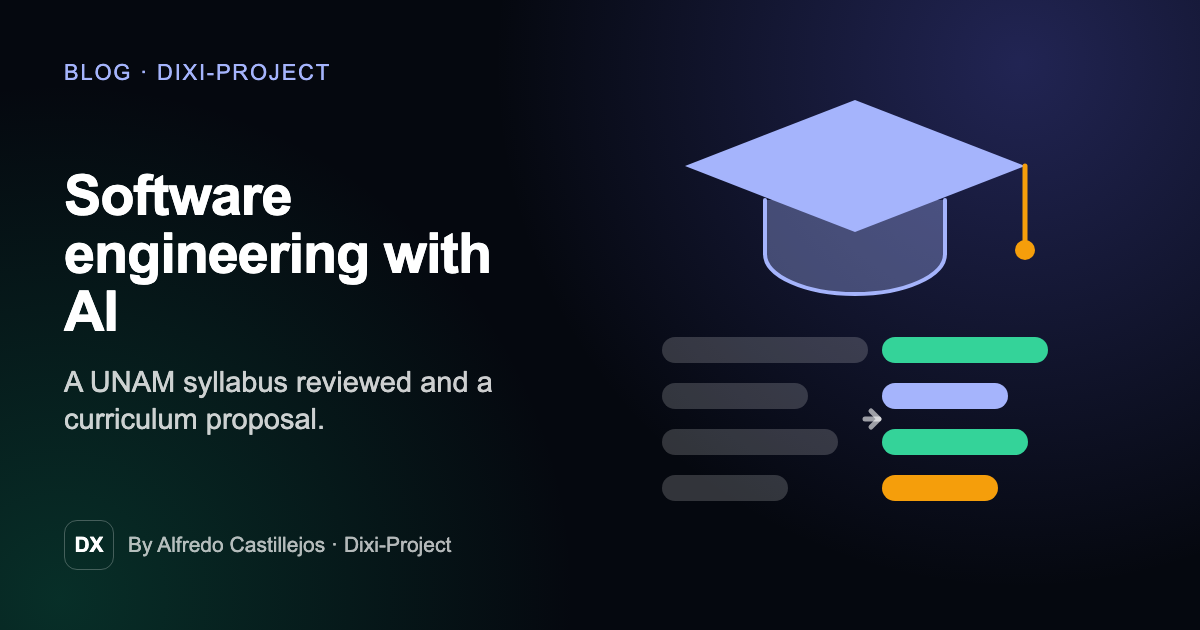
Teaching software engineering when AI writes the code: a UNAM syllabus reviewed and a curriculum proposal
We review UNAM's undergraduate Software Engineering syllabus against what AI can actually do today, and propose what to change, how to assess students and whether the degree should get longer or shorter.
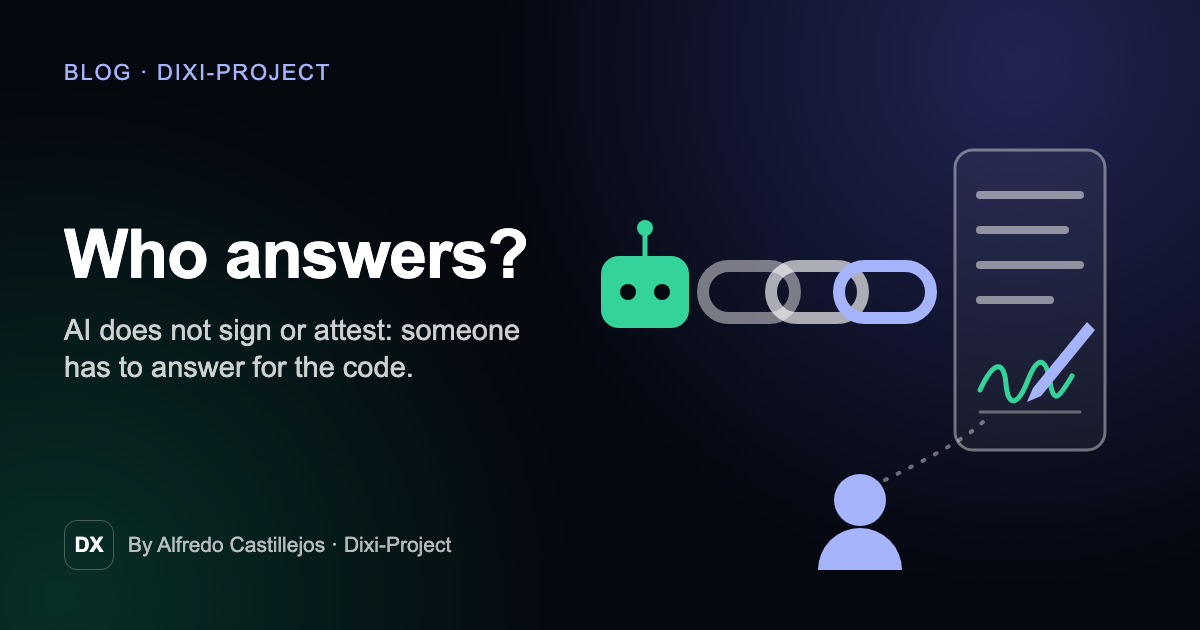
Who answers when AI wrote the code? Sign-off, attestation and accountability in generated software
AI does not sign, attest or answer to anyone. What copyright and product liability say today, what open source projects do, and a practical model for making sure someone answers.
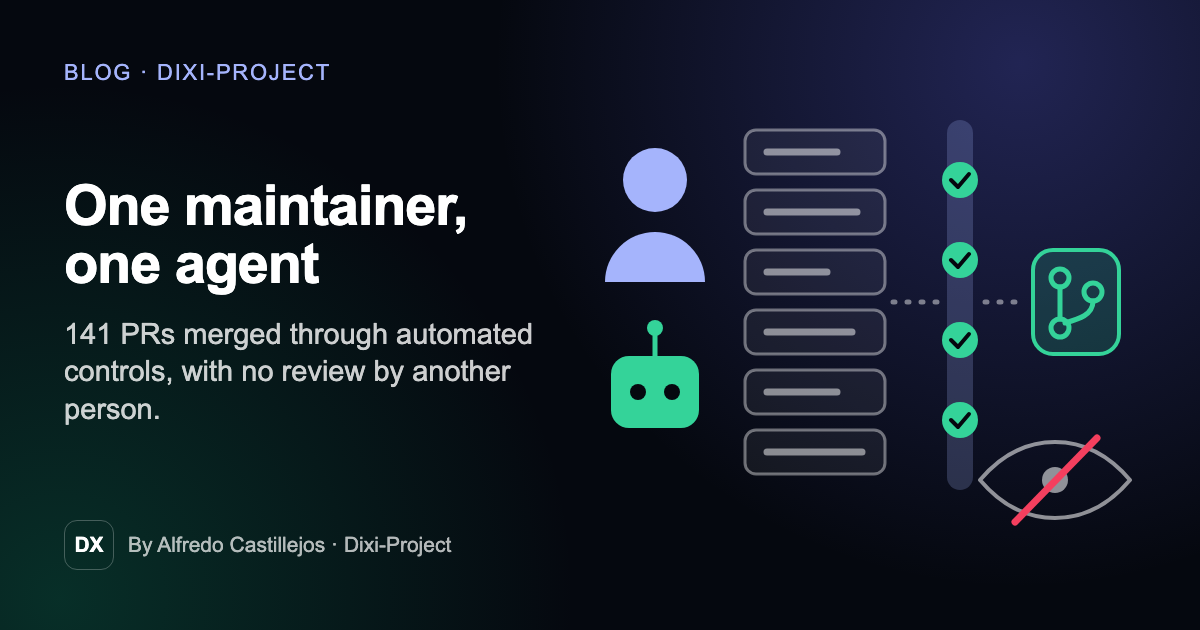
One maintainer, one agent and 141 PRs with no human review: do automated controls replace review or just disguise it?
Thirty days of a real production repository, with 88% of commits co-written by AI and no reviewer. What the automated controls stopped, what slipped past them and what it means.
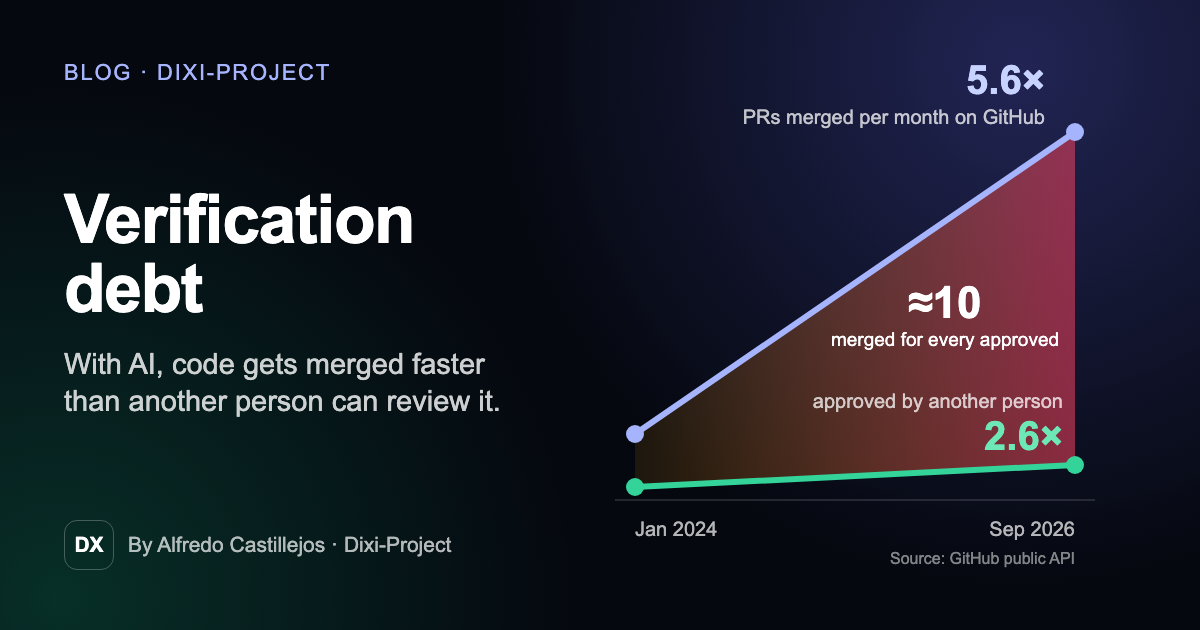
Verification debt in AI-assisted development: hypotheses, rival explanations and mitigation
AI lets teams generate software faster than they can verify it. A mathematical model, GitHub data and the levers that keep verification debt under control.
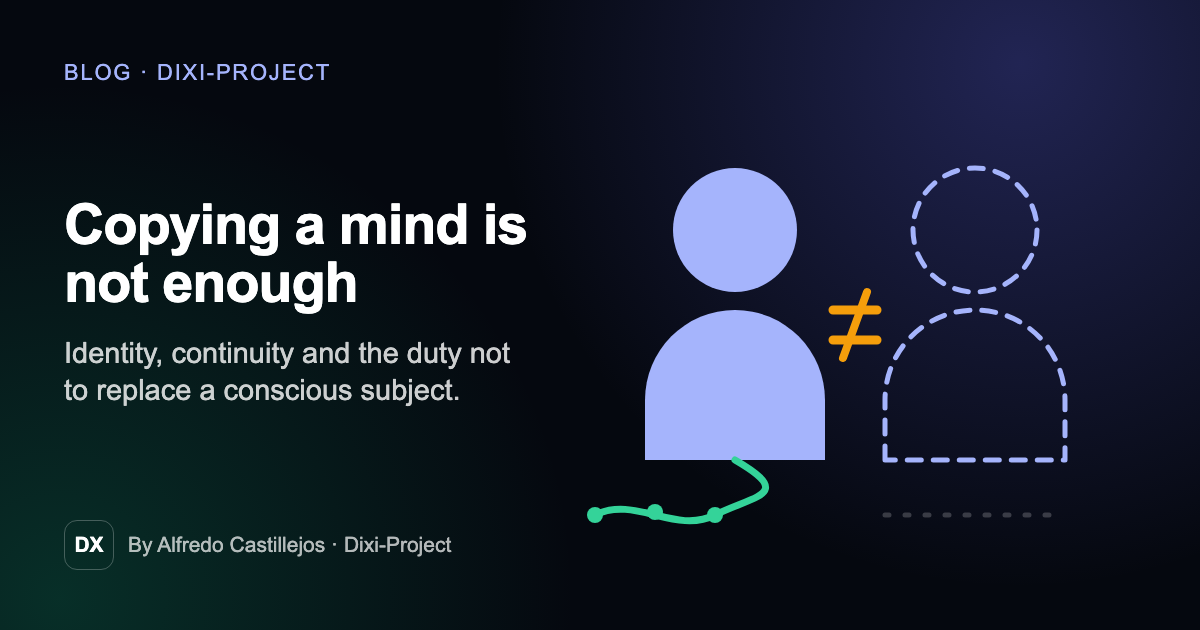
Copying a mind is not enough: identity, continuity and the duty not to replace a conscious subject
Copying someone's memories does not move them. An ethical proposal to tell restoring, duplicating and replacing a conscious subject apart, biological or artificial.
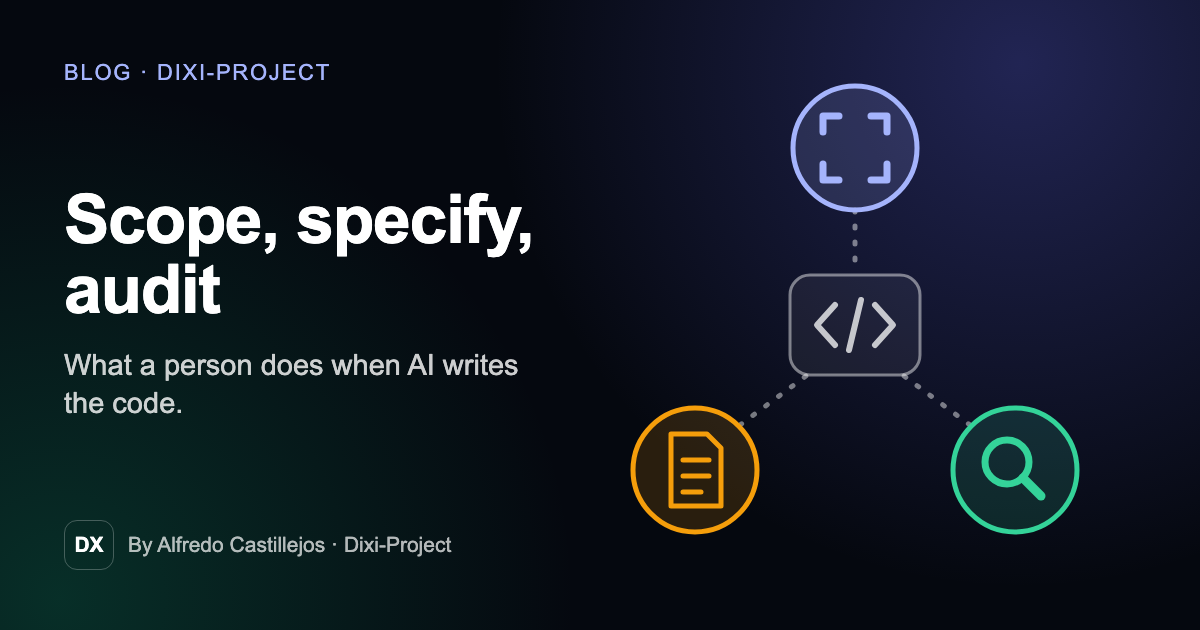
Scope, specify, audit: the new human roles in AI-assisted software development
When AI writes more code than people can review, human work has to move. What each new role does, which tools it uses, what skills it needs, and how big a team should be now, with data.